Floral Ring 5: A Thoughtful Appliqué Circle for Real Projects
First Impressions: Graceful, Grounded, and Ready for Purpose
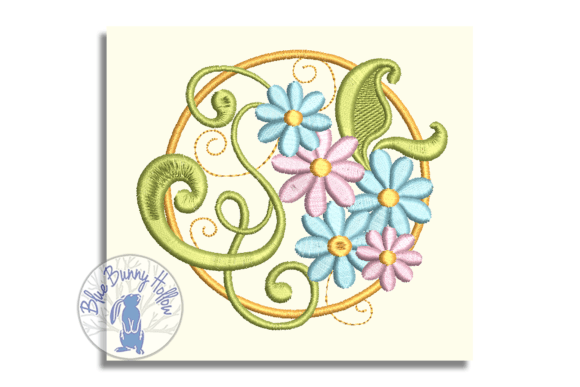
Opening Floral Ring 5 feels like unrolling a quiet invitation—not loud or flashy, but intentionally composed. It’s a true circle: balanced, centered, and softly asymmetrical in its floral placement. The flowers aren’t fussy botanical studies; they’re stylized with gentle curves, open petals, and layered leaves that suggest movement without crowding the frame. This isn’t a design shouting for attention—it’s one that earns it through cohesion and calm confidence. As an embroidery designer who’s stitched hundreds of wreaths for client projects, I immediately sense Floral Ring 5 belongs on things people hold close: baby blankets, linen tea towels, boutique aprons, or the chest of a lightweight sweatshirt meant for spring markets.
Where It Shines: From Tote Bags to Tiny Baby Onesies
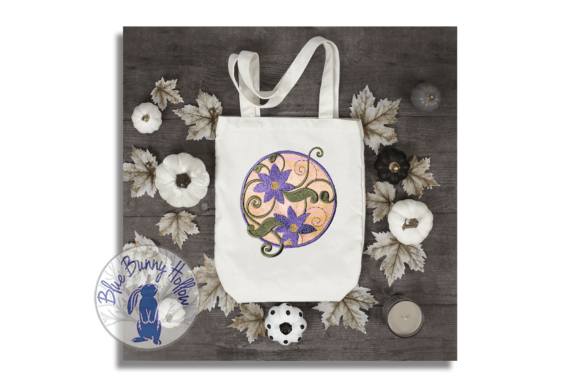
I recently tested Floral Ring 5 on a natural canvas tote for a local florist’s pop-up shop—and it landed perfectly. The circular shape framed the brand’s name cleanly when placed just below the strap seam, and the appliqué construction gave subtle dimension without adding bulk. On medium-weight cotton twill, the satin-stitched petals held crisp edges, and the fill-stitched leaves retained texture even after light washing. For small business owners, this is gold: it reads beautifully in person and photographs well for Etsy listings or Instagram posts.
It also translated elegantly onto a 100% cotton baby onesie—centered on the back yoke. Because the design avoids ultra-fine details (no stamens, no micro-vines), it stayed legible at 3.2 inches wide, and the open negative space inside the ring kept the piece from feeling heavy on delicate fabric. Sweatshirt embroidery? Yes—but stick to midweight fleece or French terry, not ultra-thin jersey. The appliqué base gives structure, but thread density still matters: too much fill stitch in tight areas can stiffen seams.
Where to Pause: Texture, Scale, and Fabric Realities
Floral Ring 5 isn’t magic on every surface. On highly textured fabrics like bouclé or thick terry cloth, the outer satin-stitched border can lose definition—test it first with a lightweight tear-away stabilizer and reduced top tension. On stretchy knits (think raglan tees or ribbed caps), skip direct hooping. Instead, use a cutaway + topping combo, and consider slightly reducing the design’s scale if placing it on curved areas like cap fronts.
Dark fabrics demand extra attention. Since the description notes it’s an appliqué design, verify whether the base fabric layer is intended to show—or if it’s fully stitched over. If it’s a traditional appliqué, choose an underlay fabric that complements your thread colors rather than competes. And while the circle feels generous, don’t assume it fits standard 4x4 hoops without checking the file dimensions. Many “circle” designs creep into 5x7 territory once appliqué layers and tack-down stitches are added.
What Customers Actually Notice
Your buyers don’t read file specs—they feel quality. With Floral Ring 5, they notice how the petals sit just *above* the background fabric, not flat against it. They see the thoughtful spacing between blooms—no visual clutter, no awkward gaps. That translates directly to perceived value: a handmade product that looks intentional, not assembled. For Etsy sellers, that means fewer “Is this machine-made?” questions and more “I need three more for my bridal party.” For craft fair vendors, it means longer stops at your booth—because people pause to trace the curve of a leaf with their eyes.
Designer Notes You’ll Want Before Stitching
- Always test on scrap fabric first—especially if using it for commercial embroidery or client work. Check how the appliqué fabric behaves with your chosen thread weight and needle size.
- Review stitch density in the center. Dense fill areas near stems or overlapping leaves can cause puckering on lightweight cottons. Lighten density manually if needed, or add a second layer of stabilizer.
- Confirm hoop size compatibility before digitizing for multi-position jobs (e.g., matching sets for napkins or pillow covers).
- Inspect small details at actual stitch-out size: Are leaf tips sharp? Do petal edges blur on dark backgrounds? Run a black-and-white mockup to assess contrast.
- Use proper stabilizer: Medium-weight cutaway for stable wovens; tear-away + topping for knits. Skip basic iron-on if stitching on baby items—heat sensitivity matters.
- Check licensing before selling finished products or bundling Floral Ring 5 as part of a digital embroidery bundle. Not all floral wreaths include commercial rights by default.
Beyond the Hoop: Brand, Trust, and Quiet Confidence
Floral Ring 5 doesn’t try to be everything. It’s not a maximalist holiday monstrosity or a minimalist line-art trend. It’s a considered, repeatable motif—one that supports your voice instead of drowning it. When used across a product line (say, matching kitchen towels and aprons for a small shop), it builds recognition without repetition fatigue. That consistency signals professionalism to customers, especially those buying personalized gifts or wedding favors.
As a designer, I appreciate that it leaves room for interpretation: pair it with script monograms, layer it beneath a simple phrase (“Gather,” “Bloom,” “Home”), or let it stand alone as quiet elegance. It works in printable mockups because the circle creates natural framing—and that matters when you’re converting browsers into buyers online.
Ultimately, Floral Ring 5 succeeds where many floral wreaths fail: it balances decorative charm with functional clarity. It’s a machine embroidery design that breathes, adapts, and enhances—never overwhelms. Whether you’re stitching for joy, profit, or a heartfelt gift, this one earns its place in your embroidery project queue.